partner compliance
Affiliate Compliance: Keeping Comparison Sites and Publishers Inside the Rules
Affiliate compliance means making sure the websites that promote your products for a commission, comparison portals, review sites, deal pages, present them accurately and with the required disclosures. The recurring failures are outdated rates and offers, rankings presented as advice, missing commission disclosure and your links on sites you never approved. A firm cannot outsource its obligations to the publisher: where it commissions or approves the content, it remains responsible, and the affiliate can face liability of its own.
Part of: Partner Compliance guide →
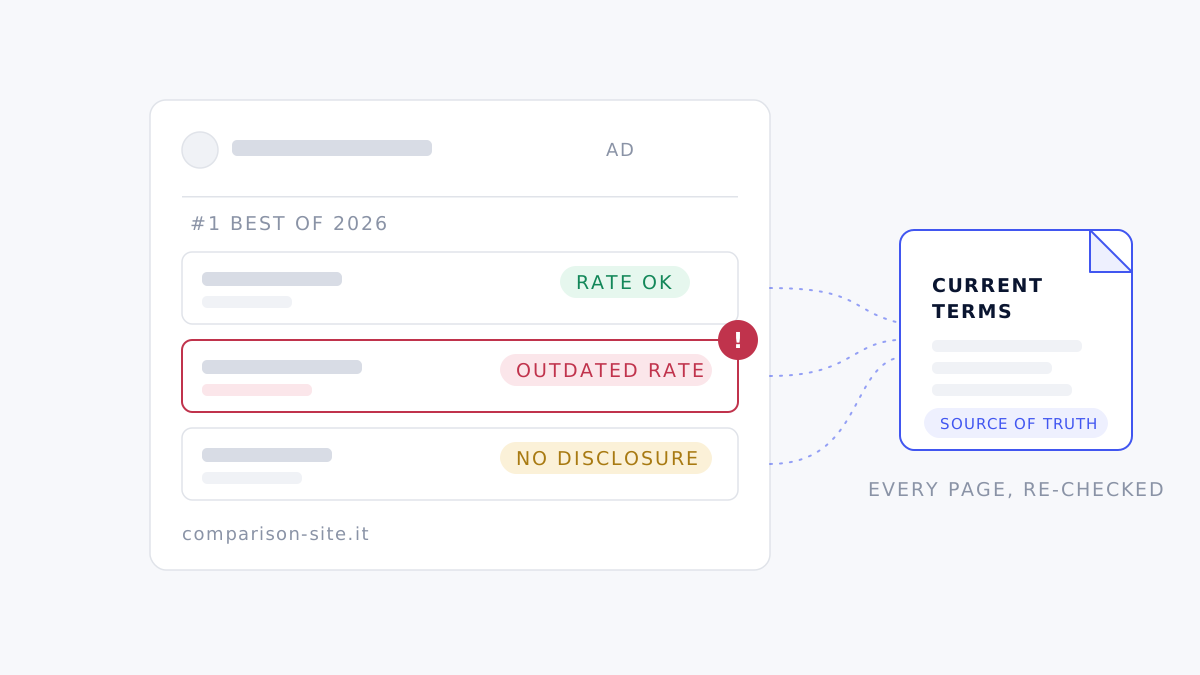
Affiliate marketing is the oldest partner channel in financial services and still the largest for many firms: comparison portals, review sites, cashback and deal pages, vertical blogs, all sending traffic for a commission. It is also the channel where non-compliant content accumulates fastest, for a structural reason: affiliate content is built to rank and convert, and it stays online long after the offer it describes has changed.
Where affiliate content goes wrong
Four failure patterns recur across affiliate programmes.
Outdated rates, fees and offers. A comparison table quotes the promotional rate from last quarter. A review still describes a welcome bonus that ended in December. Nobody lied: the page was accurate when published, then the product moved and the page did not. Multiply by hundreds of pages per partner and this becomes one of the biggest sources of misleading content in the channel.
Rankings and superlatives presented as advice. “Best account of 2026”, “our top pick”, a five-star score. When the ordering is influenced by commercial terms, presenting it as an editorial judgement is misleading, and when the product is a regulated one, superlative claims need to survive the fair, clear and not misleading test.
Missing or buried disclosure. The commercial relationship must be visible: that the site earns a commission, and that the page is promotional. A one-line note behind an “advertiser disclosure” link, three clicks away, is the kind of disclosure that looks fine internally and reads very differently in a regulator’s report.
Links outside the approved network. Affiliate links travel. Sub-affiliates, content scrapers and copycat sites end up carrying your tracking links and describing your products with nobody under contract and nobody checking. The network that is actually promoting you is almost always wider than the one in the register.
Why this lands on the firm
The logic is the same across the UK and EU regimes and it is covered in depth in the partner compliance guide: responsibility does not disappear because a third party publishes the content. Regulators look at who created, commissioned or approved the communication, and the affiliate can have obligations of its own. Commission agreements and content guidelines are necessary, but they do not transfer the firm’s accountability. If a comparison site quotes your old rate under your logo, the finding is yours.
Keeping the channel inside the rules
The controls are the standard six from the partner compliance checklist, with two points of emphasis specific to affiliates:
- Freshness is the core check. For creator content the typical finding is a missing warning; for affiliate content it is staleness. Monitoring has to compare what each page says against the current product terms, continuously, because every product change silently invalidates an unknown number of partner pages.
- The perimeter must be discovered, not assumed. Monitoring only the contracted domains misses the part of the network that carries the most risk. Coverage should start from the register and expand to wherever your tracking links and product claims actually appear.
This is what BIQUO does on the affiliate channel: it monitors every page across the declared network, checks each claim, rate and disclosure against your current terms and guidelines, flags what has drifted, and surfaces the sites promoting you from outside the perimeter, with the evidence and the audit trail attached.
Frequently asked questions
Is a comparison table a financial promotion?
If it presents your product and invites the reader to take it, it can qualify, and the fair, clear and not misleading standard applies to the rates, fees and claims it shows. An outdated rate in a comparison table is not a cosmetic error, it is a compliance finding.
Do affiliates have to disclose that they earn a commission?
Yes. Advertising rules across the UK and EU require commercial relationships to be transparent, and financial promotion rules add their own requirements on top. A ranking that is actually ordered by commission, presented as an editorial judgement, is a classic failure.
What about sites we never signed?
Affiliate links travel: sub-networks, scrapers and copycat sites end up promoting your products without a contract. Your responsibility follows the promotion of your product, which is why monitoring has to cover the network that is actually active, not just the one on paper.