partner compliance
Manual vs Automated Partner Compliance Monitoring (2026)
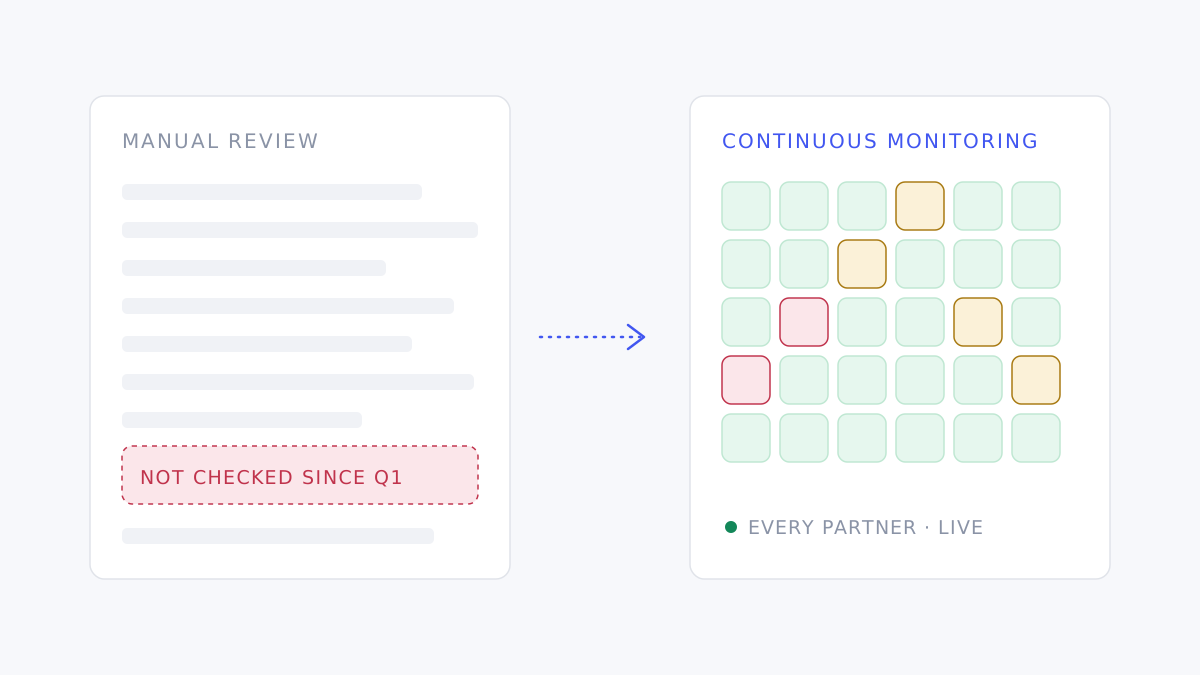
For a regulated firm with a growing programme, automated monitoring is what keeps pace with partners publishing 24/7 across web and social channels. Manual review, spreadsheets and quarterly spot-checks, is workable only for a handful of low-risk partners and leaves gaps regulators can find. Automation covers every partner and every piece of content in real time, with a complete audit trail.
Part of: Partner Compliance guide →
What’s the difference?
Manual partner compliance monitoring means people periodically reviewing partner content by hand: opening affiliate sites, scrolling social feeds, logging findings in spreadsheets, and chasing fixes over email. It is how most compliance teams started, and it works while a program is small.
Automated partner compliance monitoring uses software to continuously scan partner content across every channel, classify each piece against the relevant rules in real time, and route anything non-compliant for resolution, keeping a time-stamped record throughout.
Manual vs automated: side by side
| Dimension | Manual review | Automated monitoring |
|---|---|---|
| Coverage | A sample, spot-checks of a few partners | Every partner, every piece of content |
| Time to detection | Weeks to months (until the next review) | Minutes to hours, continuously |
| Cost as partners grow | Rises with headcount, linear | Largely flat, scales with software |
| Channels | Whatever a reviewer can open by hand | Web, social and video in parallel |
| New formats (video, Stories, lives) | Easily missed | Checked systematically |
| Audit trail | Manual notes, prone to gaps | Complete, time-stamped, regulator-ready |
| Best for | Fewer than ~10 low-risk partners | Any regulated program at scale |
When manual review is enough
Manual monitoring can be reasonable when you have a very small number of partners, low-risk products, and partners who rarely publish. If a single person can realistically review everything your partners put out within days, the overhead of tooling may not be justified yet.
Why automated monitoring wins for regulated firms
- Liability doesn’t scale down. One missed finfluencer post can become your breach, however small the program.
- Partners publish 24/7. Periodic reviews leave windows of exposure between checks.
- Formats are getting harder. Video, Stories and live streams are easy to miss by hand and far more tractable for automated monitoring.
- Audit readiness. Regulators expect evidence of ongoing oversight, not occasional snapshots.
What automated partner monitoring looks like
Effective automation follows a five-stage lifecycle: detection, triage, investigation, resolution and audit. It is the same lifecycle covered in the complete partner compliance guide, applied continuously rather than once a quarter. BIQUO is built around exactly this: it scans partner content across the EU and UK, classifies every piece as compliant, warning or violation in real time, and keeps the audit trail for you.
Frequently asked questions
Can't we just rely on partners to self-comply?
No. Under UK and EU rules the regulated firm remains accountable for promotions made on its behalf, and the partner can face separate liability of its own. Contractual obligations help, but they do not remove your responsibility if a partner publishes something misleading.
How often should partner content be checked?
Partners publish continuously, so point-in-time reviews leave windows of exposure. Best practice for regulated firms is continuous monitoring with real-time classification, rather than monthly or quarterly spot-checks.
Does automated monitoring replace the compliance team?
No, it focuses them. Automation handles detection and triage at scale so analysts spend their time on investigation, judgement calls and resolution rather than manually trawling partner websites and social feeds.
Which channels can be monitored automatically?
Affiliate and comparison websites, social media (Instagram, TikTok, YouTube, X) and partner channels: the places partners actually publish.